 Customer Support
 Contact Sales

 About
About


Twelve Top Tips from InPublishing's recent AI Special Webinar
AI Special WebinarInPublishingInPublishing AI Special


Sharelines
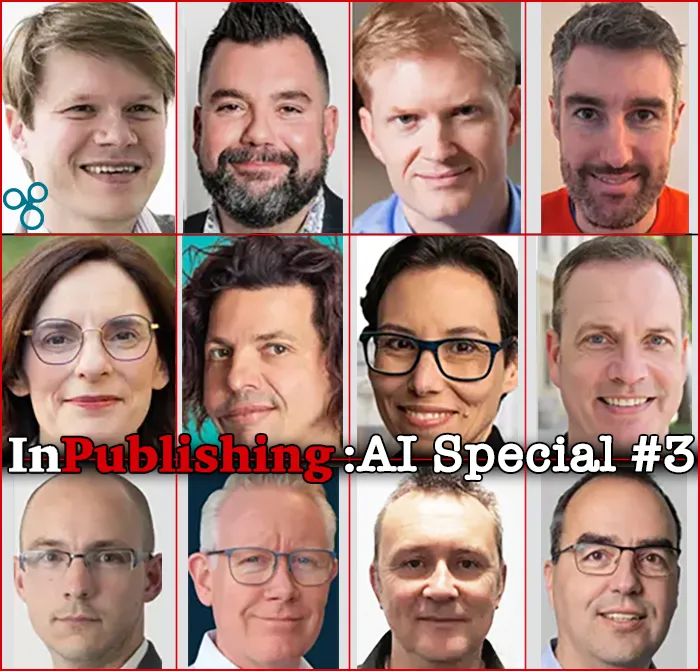
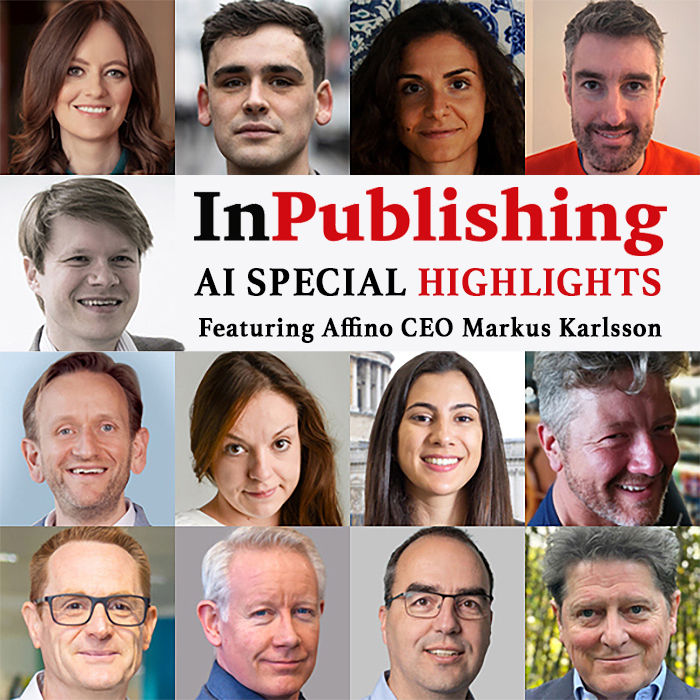
Discover 12 expert AI tips from InPublishing’s exclusive webinar!Unlock AI secrets with InPublishing’s top tips—read now!Boost your publishing game with AI insights from industry pros!Key Tips per presenter from InPublishing’s 3rd AI Special :
- Markus Karlsson, CEO and founder, Affino : “Run safe experiments now. Pilot internally and with trusted clients. The biggest adoption blocker isn’t capability — it’s fear of AI “messing things up”. Swap fear for FOMO: every month you delay is time competitors (or major platforms) gain on you.”
- Terry Hornsby, chief product and technology officer, Reach : “Don’t do AI for AI’s sake. Instead, ask yourself what the challenge is that you’re trying to solve and work backwards.”
- Hutch Hicken, chief technology officer, BlueToad : “Structure your archive. Whether by human curation or AI-driven extraction, structuring your content into rich but responsive articles — including images and formatting — is key to unlocking publication value. Once this groundwork is laid, your archive can become the foundation for new applications and reader interactions.”
- Brian Alford, founder and CEO, Bright Sites : “Don’t reinvent the wheel. There are a number of newsroom-friendly AI tools on the market to help with discovering opportunities to make your content discoverable in the constantly changing digital publishing world.”
- Jenni Allen, director of content, Which? : “Encourage experimentation. Not every AI trial will succeed, and that’s okay. Some of our early experiments such as using it to inform SEO didn’t work out, but as the technology evolves, we revisit them to see if improvements have been made. Staying open to testing and learning helps identify the most valuable applications.”
- Rob Green, director of product and transformation, ESco : “Get your data in shape. Clean records and connected systems are the fuel that lets AI actually deliver results.”
- Adriana Whiteley, director, FT Strategies : “Figure out where you stand: Know your audience and your output. Re-tag content to identify audience clusters and the sub-topics that perform best with them. Map revenues by content type, to understand how much each is worth in advertising, sponsorship, subscriptions or retention. AI can help: commercial LLMs can classify articles by various content dimensions such as subject, geography, or bias at scale, giving a clearer view of what drives success.”
- Damian McAlonan, AI & digital solutions director, Mark Allen Group : “Bake credibility into the process. Our brands run on trust and defined guardrails around disclosure, testing, and data privacy. You must treat AI like any other editorial piece subject to editorial rigour and accountability at all times.”
- Martin Ashplant, product development & operations director, PA Media : “Be transparent with audiences. Make it clear when AI has played a role in producing content, and equally clear when it hasn’t. Over time, human-created journalism will carry a premium precisely because it is distinct from machine output.”
- Derek Milne, commercial pixometrist, Pixometry : “Define success metrics at the outset and use to guide decisions.”
- Carl Myers, chief technology officer, Faversham House : “What works for another site might not be right for you — so experiment, and don’t be disheartened if it’s not the first, second or third thing you do that’s actually any good.”
- Tom Pijsel, VP product management, WoodWing : “Implement AI in cooperation with the editorial team. The success of AI adoption depends on people, not technology. If editors, designers, and journalists — who will interact with AI tools daily — feel threatened or sidelined, they’ll resist. But when engaged, well-trained, and comfortable using AI to reduce drudgery, excitement grows. In short: collaborative rollout is essential. Through workshops where teams test AI features on real assignments, feedback loops to refine tools, and transparent communication about goals and limitations. By making staff co-owners of the AI journey, publishers can build trust and ensure smoother adoption.”



Posted by Stefan Karlsson
Did you find this content useful?
Thank you for your input
Thank you for your feedback
Blog Navigation
Stefan Karlsson
Affino
Feeds
Blog Navigation





Affino 9.0.10 - The Elevation Update
10-Oct-2025

Affino 9.0.10 - The Elevation Update
15-Sept-2025




The Future of Music 2025
10-Jan-2025
Film Release Highlights for 2025
09-Jan-2025

Related Articles






![AI SPECIAL : Using AI for new product development [InPublishing]](https://content.affino.com/AcuCustom/Sitename/DAM/654/2024-Affino-InPublishing-AI-Special-7001.jpg "AI SPECIAL : Using AI for new product development [InPublishing]")
Upcoming and Former Events

Affino Innovation Briefing 2025
St Martin's Hall, St Martins in the Field, Trafalgar Square, London WC2N 4JJ

Webinar - Affino Elevation Update Demo
Zoom Webinar - Online
Webinar - Introducing Affino's Fourth Generation AI Services
Zoom Webinar - Online
Webinar - Enhanced Affino Commerce & Subscription Capabilities
Zoom Webinar - Online

Driving business at some of the world's most forward thinking companies











Our Chosen Charity


Meetings:
Google Meet and Zoom
Venue:
Soho House, Soho Works +
Registered Office:
55 Bathurst Mews
London, UK
W2 2SB
© Affino 2026